
![[Translate to English:] insectes aquatiques dans une rivière](/fileadmin/_processed_/b/a/csm_ADN_et_biodiversite_6e25785ae8.webp)
Barcoding of aquatic Invertebrates
DNA Markers for Better Identification and Monitoring of Aquatic Biodiversity
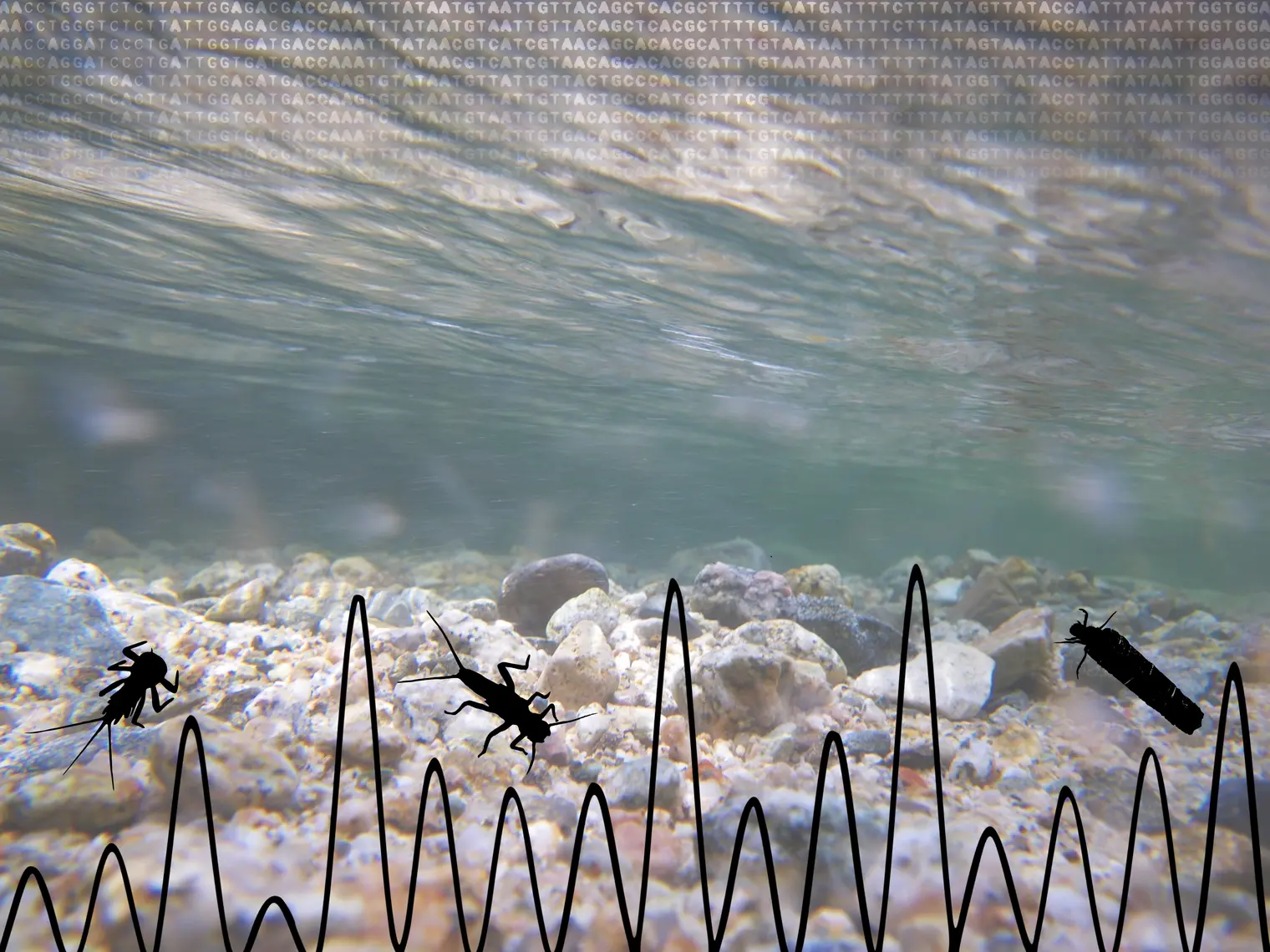
Species identification is at the heart of biodiversity and environmental sciences. Long based solely on the observation of morphological characteristics, it is now undergoing a true revolution thanks to DNA-based approaches. These methods make it possible to identify organisms at all stages of their development, even from damaged specimens or fragments, or to link larvae and adults of the same species.
A major breakthrough involves the use of environmental DNA (eDNA): traces of DNA naturally left behind by living organisms in their environment. This innovative technique makes it possible to simultaneously detect numerous species from a single sample, without having to capture them. Fast, accurate, and cost-effective, it is gradually establishing itself as a key tool for ecosystem biomonitoring.
The reliability of all DNA-based identification methods hinges on one central factor: the quality of reference databases. Without validated and sufficiently comprehensive data to compare the obtained sequences, no reliable identification is possible. However, international public databases remain incomplete and unreliable for many groups.
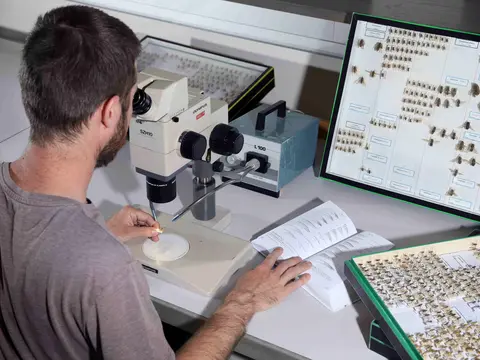
Drawing on its taxonomic expertise, the Naturéum’s “aquatic insects” team has launched two ambitious projects: the creation of a DNA reference database for European mayflies and a database dedicated to mayflies, stoneflies, and caddisflies (EPT) in Switzerland. These insects, which are sensitive to disturbances, serve as excellent indicators of aquatic habitat quality. In collaboration with national and international specialists, several specimens of each species were collected and sequenced, drawing from existing collections and new field surveys—particularly those related to updating the Swiss Red List.
These databases, covering more than 800 species, will be made available to relevant users to ensure reliable identifications and will be regularly updated as new discoveries are made.
Project Leaders : Jean-Luc Gattolliat et Laurent Vuataz