
![[Translate to English:] Schéma interne d'un crystal](/fileadmin/_processed_/e/2/csm_Marecottite_CrystalMaker_1.25Mo_71eee8b9b4.webp)
Toxic and radioactive substances
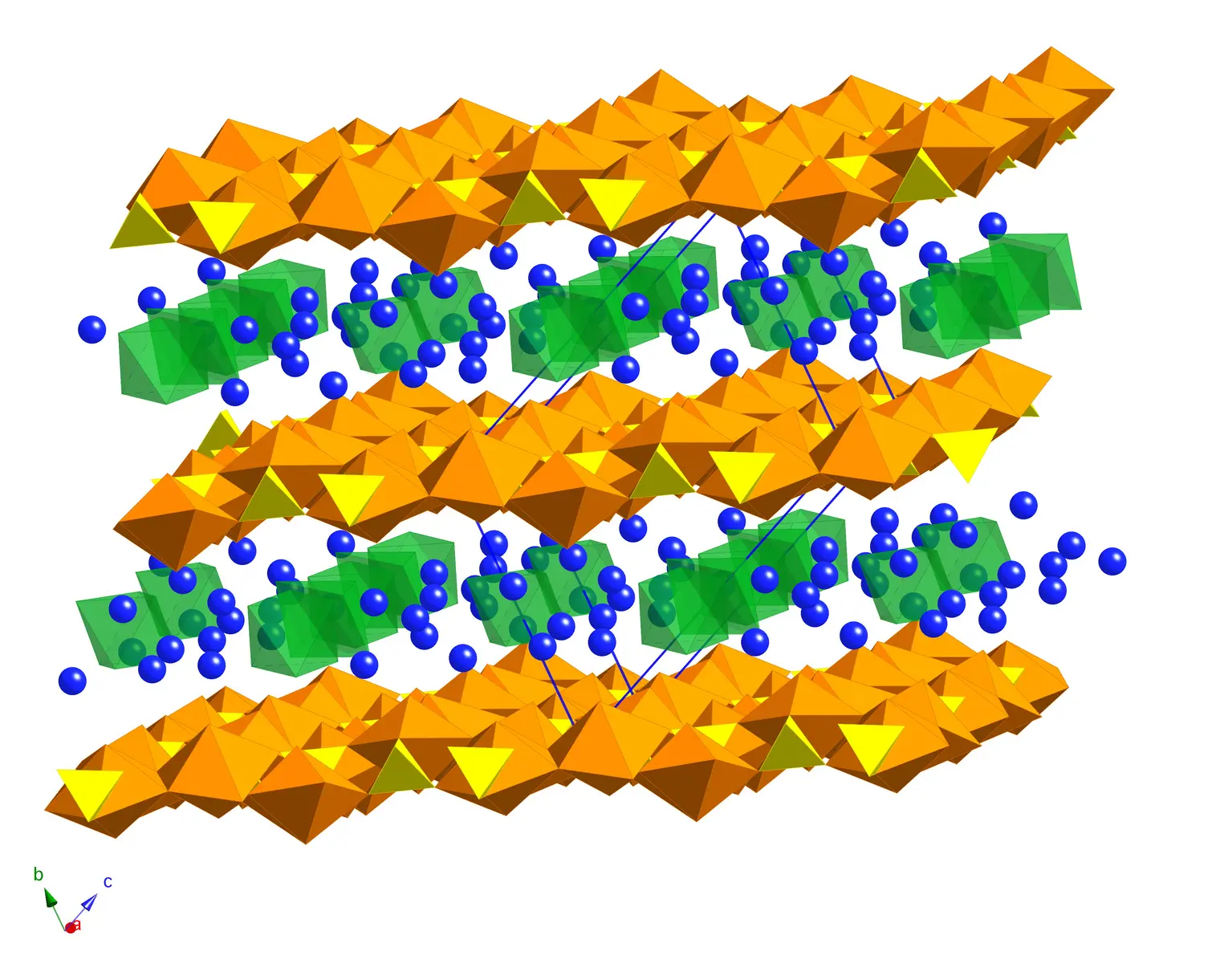
Mineralogy of Toxic and Radioactive Elements
Studying natural minerals that contain toxic or radioactive elements is by no means morbid: it is an essential step in protecting human health and better understanding our environment. In particular, it allows us to distinguish between the natural presence of certain poisons and human-caused contamination—a key factor in accurately assessing risks.
Elements such as uranium, radon, arsenic, and thallium occur naturally in many minerals. In Central Europe, and in Switzerland in particular, the subsoil is relatively rich in these elements. Added to this is the impact of human activities dating back to antiquity: mining, industry, and conflicts have left behind widespread and persistent pollution, particularly in the soil, often linked to waste or munitions.
Laboratory studies of the chemical composition, crystal structure, synthesis, and behavior of these minerals enable the development of solutions to trap or neutralize the toxic elements resulting from such contamination. It is also essential for understanding that the toxicity of an element depends on its chemical form: for example, arsenic is far more dangerous when dissolved in water than when trapped within a stable crystal.
Finally, this knowledge is indispensable for regulating the exploitation of mineral resources, anticipating risks, and limiting impacts on workers, local communities, and ecosystems.
Project Manager : Nicolas Meisser