
Department of Geology
Founded in 1818, the Cantonal Museum of Geology encouraged science enthusiasts to donate their collections. It was thus that, in the field of geology, distinguished figures from Vaud such as Jean de Charpentier, director of the Bex mines, and Frédéric-César de la Harpe, former tutor to the Tsar and a Vaud patriot, donated their fine mineral collections to the Museum. It was from the mid-19th century onwards that Philippe de la Harpe, Eugène Renevier and, later, Maurice Lugeon began to assemble the first palaeontological collections and, above all, the extensive collection of regional geology.
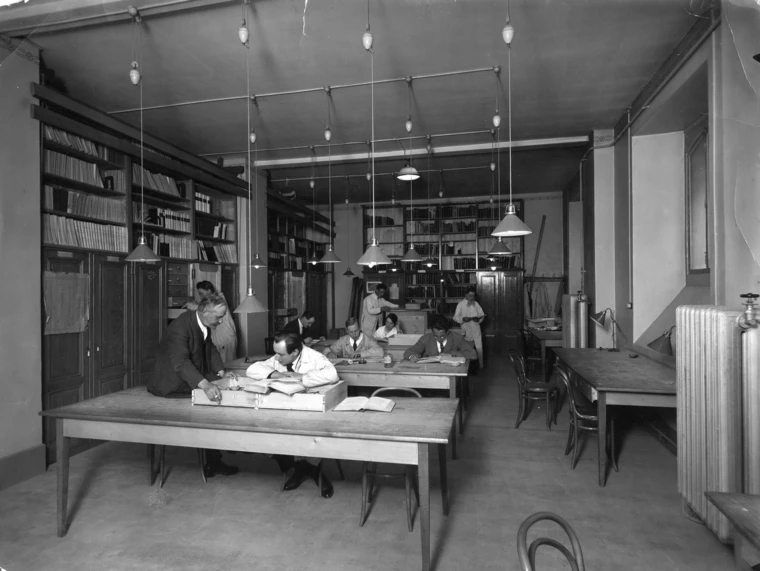
The construction of the Palais de Rumine in 1906 enabled the Museum, the university’s geology and mineralogy laboratories, and their specialist libraries—which were themselves merged in 1931—to be housed there. It was here that a genuine symbiosis took root, contributing to the considerable expansion of the cantonal collections and the influence of teaching and research. This educational endeavour attracted the greatest scholars of the time to Lausanne.
This collaboration between the Museum and the University of Lausanne continued in 1987 with the relocation of both institutions to the Humanities Building 2 (BFSH-2), now known as the Anthropole, in Dorigny. Within this ‘scientific research-museum’ symbiosis, the Geological Museum, with its 840 m² of exhibition space at the Palais de Rumine, is more than ever a bridge between researchers and the general public.
Collections
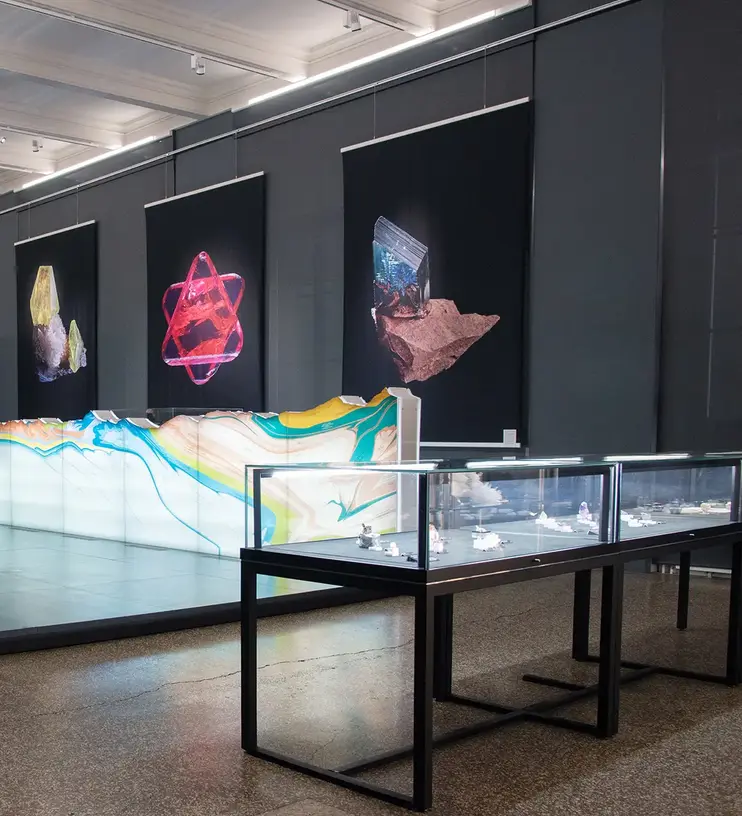
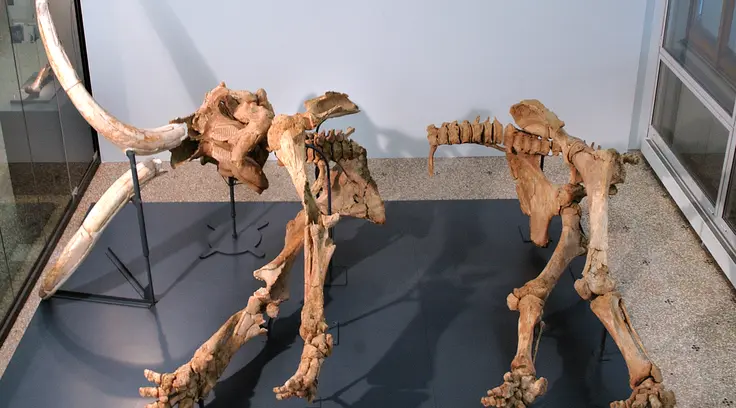
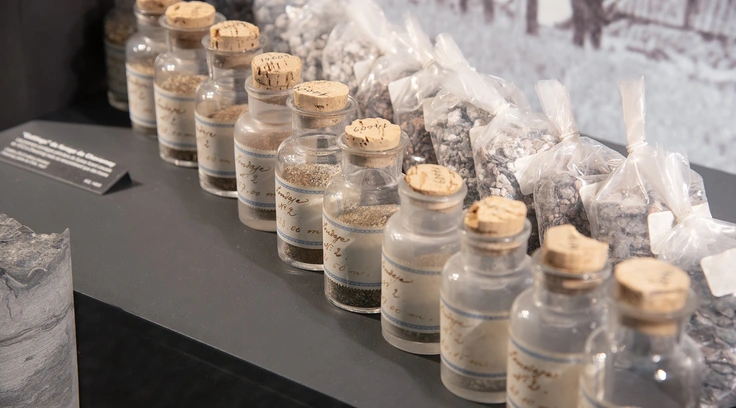
The Geology Department at the Naturéum preserves the geological heritage of the Canton of Vaud and acts as a bridge between the scientific community and the public. Indeed, sedimentary rocks and fossilised organic remains dating back thousands or millions of years are preserved and studied here: mammoths, dinosaurs, sharks, turtles, shells, palm trees and even minerals: crystals, gemstones, ores and meteorites resulting from the vast processes and changes that have affected our Solar System since its formation 4.6 billion years ago. These wonders can be seen in the exhibition rooms of the Naturéum at the Palais de Rumine.
The geological collections and archives of the Naturéum’s Department of Geology are of great interest:
- Historical collections that bear witness to local history or that of the Academy, and which can aid in understanding the history of Earth sciences.
- Scientific collections comprising important nominal and reference collections available to researchers.
- Public or exhibition collections comprising our most significant or remarkable specimens.
- Duplicate collections available to teachers and schools.
- A bibliography of the collections.
- A collection of stereoscopic photographs from the early 20th century.
- The Vaud oil archives.
- And other extremely valuable geological archives.
The Department of Geology also manages a media library and shares its library with the Faculty of Geosciences and the Environment.
But the largest items in our heritage that the Naturéum seeks to preserve cannot be stored in small boxes or on shelves; these are the geotopes, remarkable geological sites.Discover the section of this website dedicated to the collections by clicking here.
Scientific research
In the canton of Vaud, scientific research in Earth sciences began in the Department of Geology long before the discipline was taught at the University of Lausanne. It is therefore an activity dating back almost two centuries that continues to this day.
Today, the Department of Geology at the Naturéum does not pursue a single scientific research project but works across several different fields, depending on the specific expertise of its team of researchers.
Nevertheless, certain projects, such as the Vaud geotopes or public outreach, are undertaken by the whole team.
In addition to fieldwork, most of our research activities take place on the Dorigny campus, where we have our offices, laboratories and workshops. We also share a library with the Faculty of Geosciences and the Environment.
Where are we ?
The Department of Geology is headed by Nicolas Kramar, Chief Curator. The public museum's galleries are located in Palais de Rumine.
The department’s offices are located on the Dorigny university campus in the Anthropole building (rooms 1119–1128). In addition to the offices, the department houses laboratories, a library, archives, storage facilities and collections.
Postal address: Naturéum, Department of Geology, UNIL - Chamberonne, Anthropole Building, CH-1015 Lausanne, Switzerland.
Access by public transport : Metro M1, station UNIL-Chamberonne