
In brief
Since January 2023, the Cantonal Museums of Botany, Geology and Zoology have formed the Cantonal Museum of Natural Sciences, also known by its common name: Naturéum.
The multi-site institution is located in the Palais de Rumine, the Cantonal Botanical Garden in Lausanne and the Cantonal Alpine Garden ‘La Thomasia’ in Pont de Nant. The Naturéum is affiliated with the Directorate of Culture (DCG) of the State of Vaud.

Permanent botanical exhibition
Designed by architect and urban planner Alphonse Laverrière and botanist Florian Cosandey, the Cantonal Botanical Garden was inaugurated on 1 June 1946. It covers 1.7 hectares south-east of Place de Milan in Lausanne, just a ten-minute walk from the railway station. This living museum is home to some 4,000 plant species. The botanical collection also extends into the Vaud Alps at Pont de Nant. The Cantonal Alpine Garden ‘La Thomasia’ is nestled against the spectacular western face of the Grand Muveran, which towers over it at almost 1,800 metres. Visitors can admire nearly 3,000 mountain plants from all over the world. Our gardens have been Biosuisse certified since 2024.
Permanent exhibition of geology and paleontology
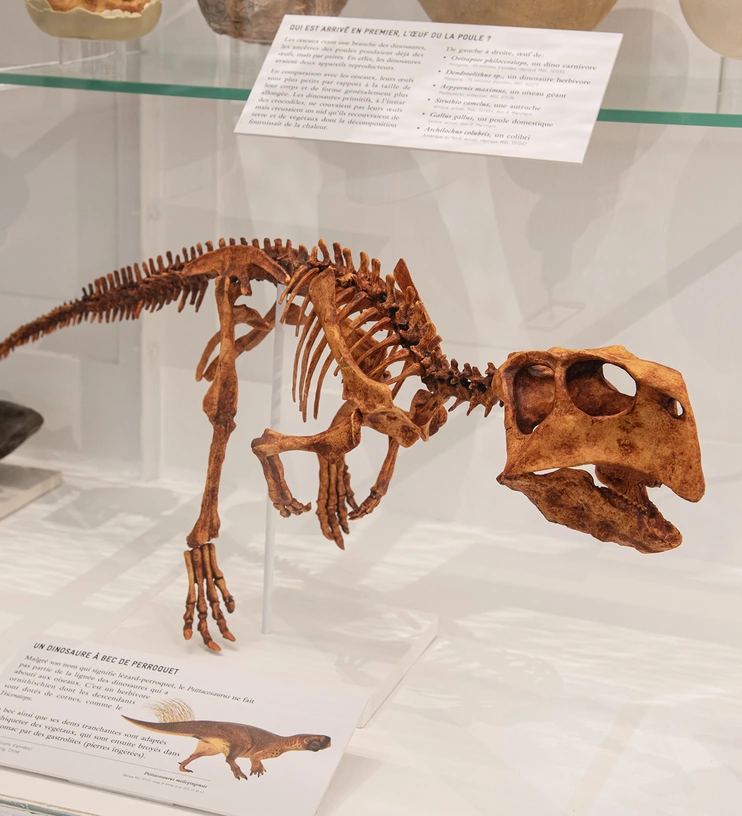
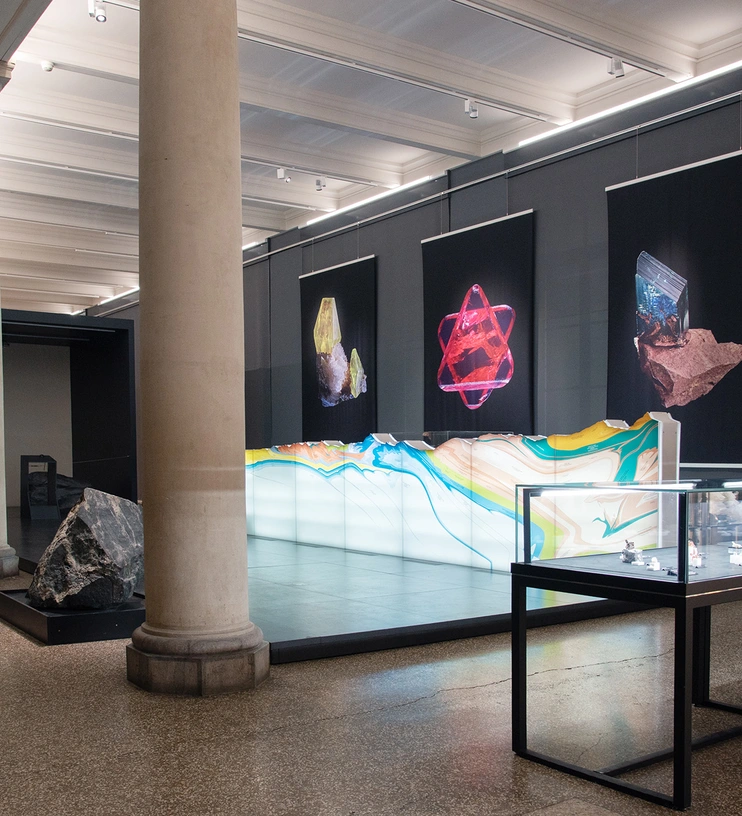
The exhibition galleries contain some extraordinary pieces, such as the mammoth from Le Brassus, the ichthyosaur from Holzmaden, giant fossils of palm trees from northern Italy, dinosaurs, meteorites and around a hundred fluorescent minerals forming a veritable constellation in the heart of the darkness. In addition to its work preserving the geological heritage of the canton of Vaud, the geology department of the Naturéum, founded as a museum in 1818, preserves and studies more than a million specimens of rocks, minerals and organic fossils dating from thousands to billions of years ago.
Permanent exhibition of zoology
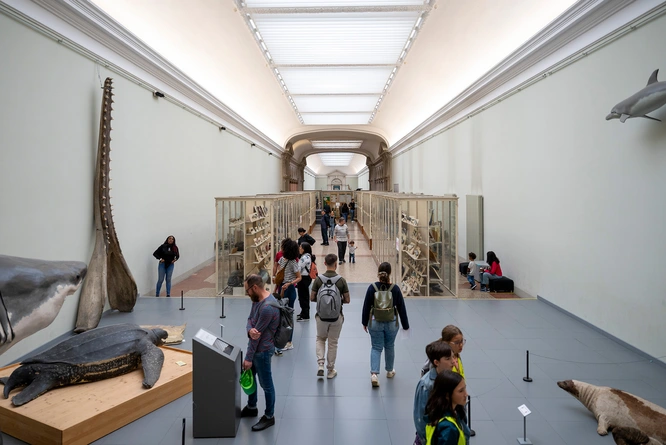
The Naturéum's zoology department, which also dates back to 1818, has a collection of around 4 million invertebrate specimens and 46,700 vertebrates, only a small fraction of which are on display to the public. The museography of the permanent exhibition has been preserved and, with its period display cases, is reminiscent of 19th-century museums. It has an old-fashioned charm, particularly the comparative anatomy room with its rows of jars, skeletons and two-headed monsters. The galleries contain impressive specimens such as tigers, moose and polar bears. At 5.89 metres, the great white shark is one of the largest stuffed specimens in the world.