Museomics
Decoding the past of species through natural history collections
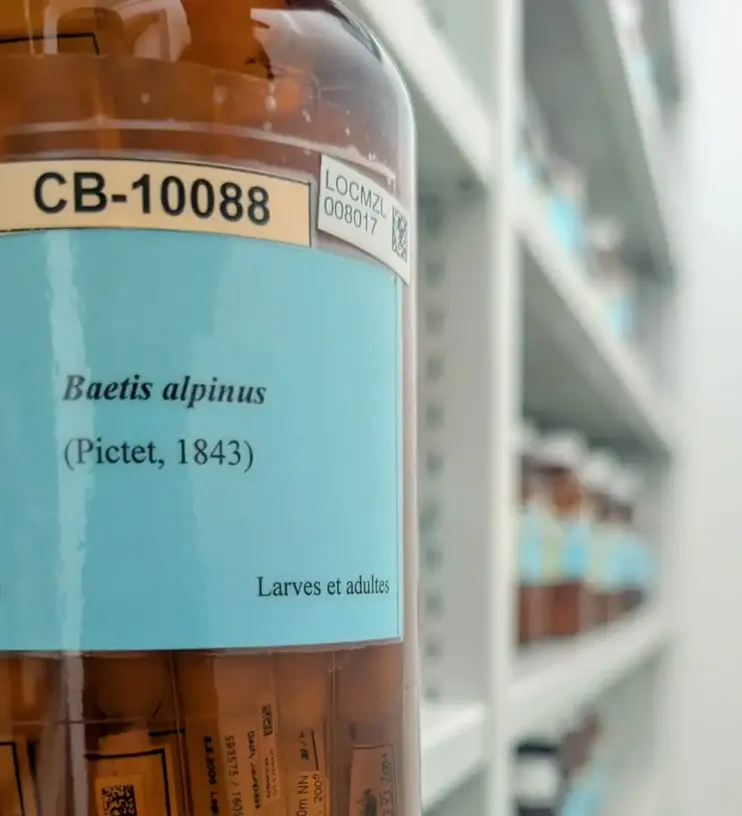
Natural history collections, like biological archives, contain millions of specimens collected over several centuries. Museomics is the discipline dedicated to analyzing DNA from these samples, even when it is severely degraded.
For the past decade or so, scientists at the Naturéum have been developing innovative methods, notably “HyRAD.” This approach makes it possible to extract genetic information from severely damaged DNA by using small probes that act as molecular baits: they specifically recognize and “hook” the DNA fragments of interest in a highly degraded mixture, much like fishing lines targeting specific fish. This approach, now adopted internationally, makes it possible to explore time periods that are inaccessible to standard protocols.
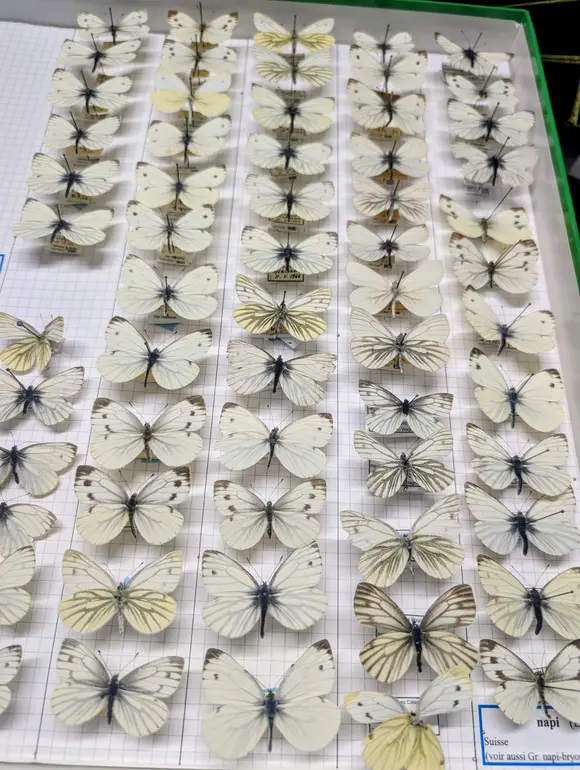
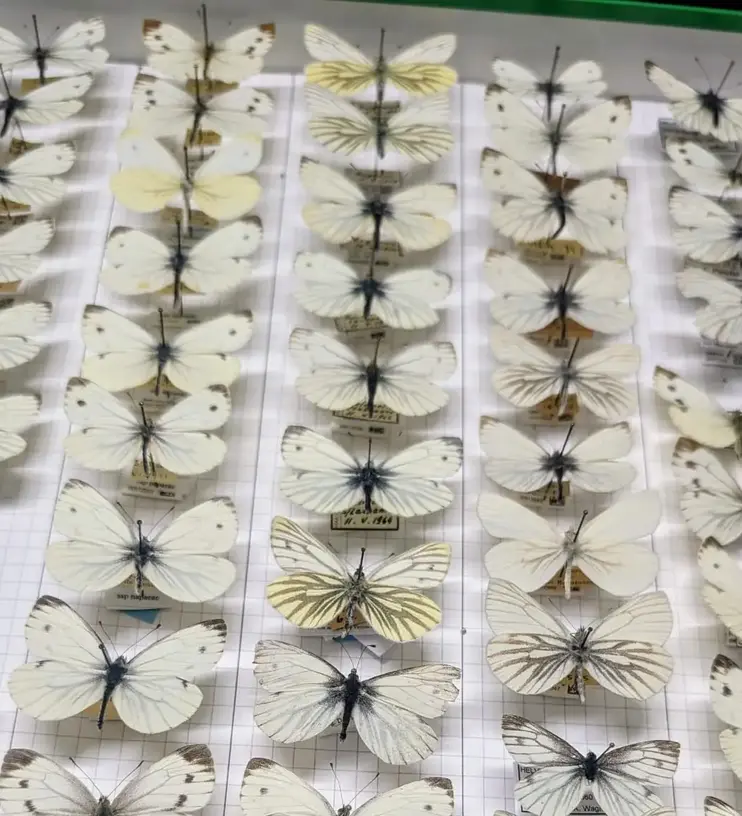
The decliNe project, funded by the Federal Office for the Environment (where “Ne” refers to the effective population size—that is, the number of individuals actually contributing to reproduction)—is part of this research effort . This project draws on Swiss entomological collections to reconstruct the demographic trajectories of insects during the 20th century. Comparing historical and contemporary specimens makes it possible to quantify genetic erosion and examine its possible causes, such as changes in land use, agricultural intensification, or pesticide use.
This perspective is largely absent from studies focused exclusively on biomass monitoring, which began, at best, in the 1970s. Any attempt to assess population decline is inherently limited in the absence of historical data that would reveal the initial status of populations. In this context, museomics emerges as a major academic reference.
It should be noted that museomics also makes it possible to reconstruct the recent and ancient evolutionary history of populations and species that are now extinct and represented solely in natural history collections.
Project Leaders : Nadir Alvarez and Jérémy Gauthier