
![[Translate to English:] Cristaux oranges sur une roche](/fileadmin/_processed_/9/a/csm_101921_Tamaite_Mont_Durand_Bagnes_VS_13mm_6c3b8d241b.webp)
Radiolarites from Mont Durand
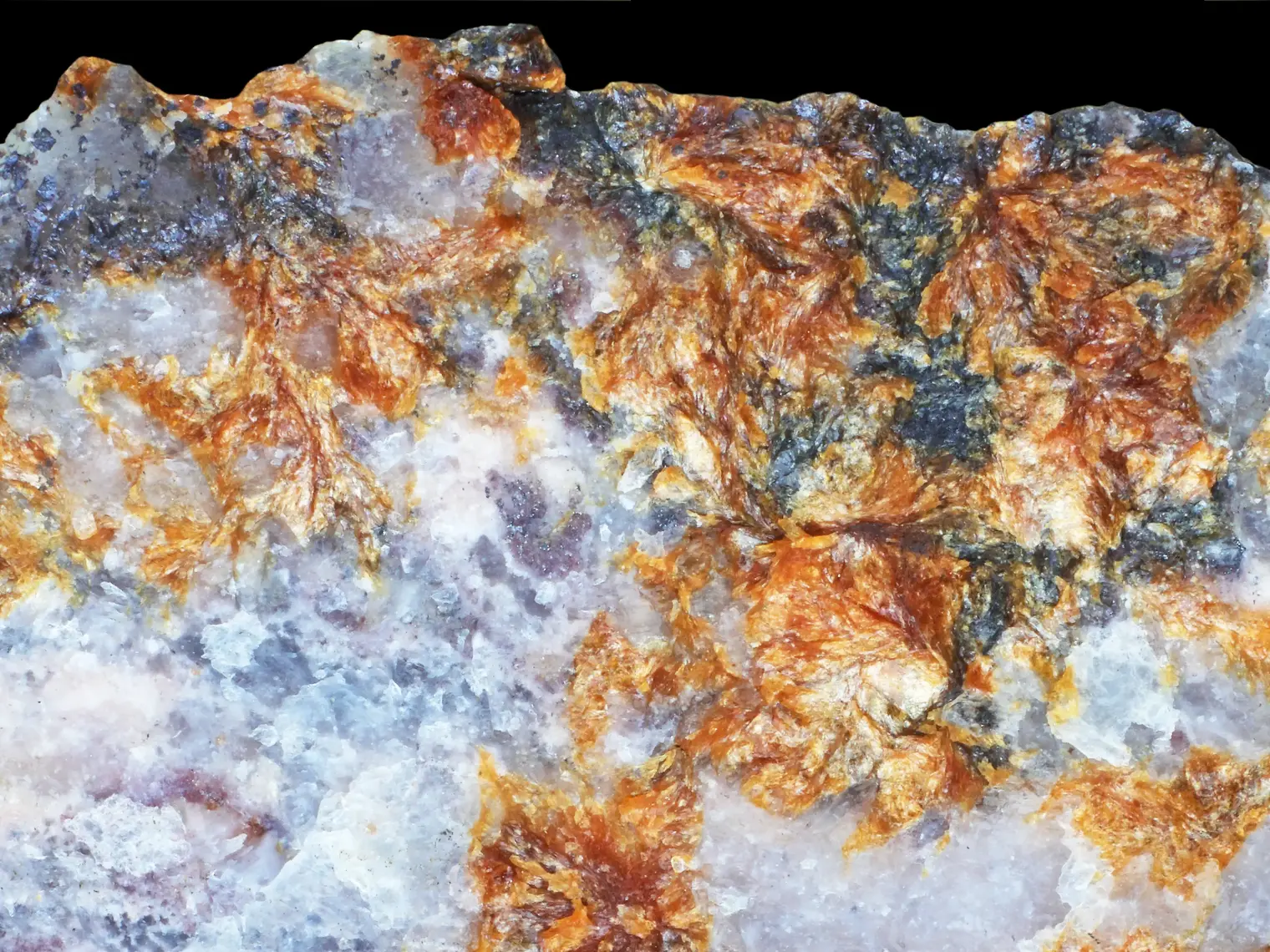
The Radiolarites of Mont Durand (Bagnes, Valais, Switzerland)
Radiolarites are deep-sea rocks formed at depths of more than 4,000 meters by the slow sedimentation of siliceous zooplankton skeletons. They often contain polymetallic nodules, consisting mainly of manganese and iron, and sometimes other metals essential to the energy transition, such as copper, nickel, and cobalt.
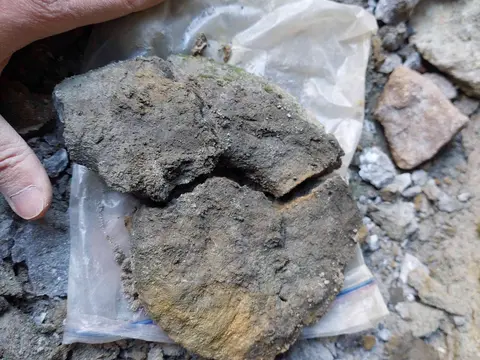
A layer of these radiolarites, containing numerous perfectly preserved fossil nodules, outcrops intermittently in the Mont Durand schists near the Chanrion hut, at the head of the Val de Bagnes in Valais. First identified in 1945 by a geologist, it is only in recent years that a detailed mineralogical study of this layer has been undertaken by Stefan Ansermet, Nicolas Meisser, and Nicolas Kramar.
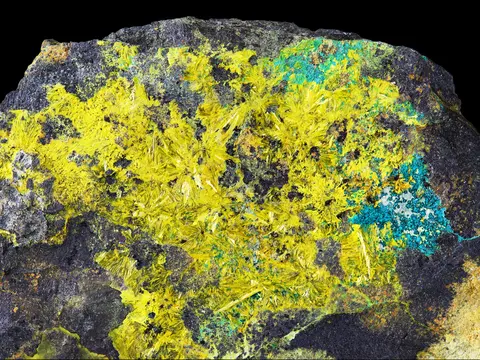
Elsewhere in Switzerland, research focused on other manganese deposits has already led to the discovery of 16 mineral species new to science, out of 100 species described for the first time in Switzerland to date. The potential for as-yet-unknown phases is therefore likely significant within this type of mineralization—a hypothesis confirmed by initial results, as two of these phases are currently undergoing further characterization in collaboration with the University of Bern.
Project Leaders : Stefan Ansermet, Nicolas Kramar et Nicolas Meisser