
Department of Zoology
History
Whilst the history of the Cantonal Museum is linked to the formation of public and encyclopaedic collections in the early 19th century, it was not until 1833, with the acquisition of Daniel-Alexandre Chavannes’ collection, that the zoological collections began to expand*. Until then, the collections had focused mainly on mineralogy, which had grown exponentially. The zoological collections could be considered merely anecdotal: there were, for example, no insects among them.
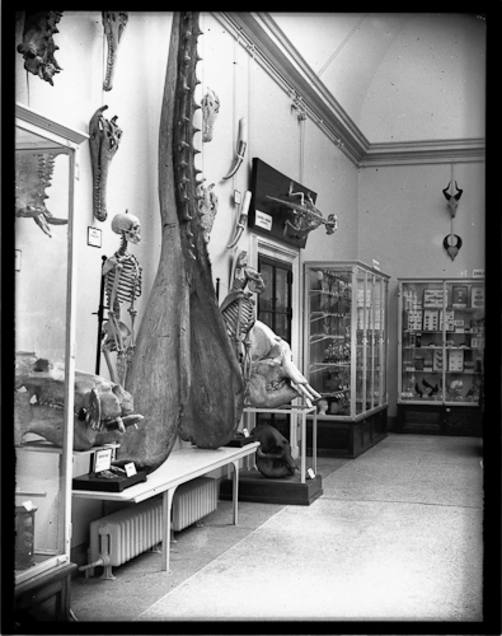
From 1833 onwards, they gradually expanded, occupying two, then three rooms of the Ancienne Académie, until their transfer in 1909 to the Palais de Rumine. The galleries then presented a rich collection intended for educational purposes, both for the general public and for medical and biology students at the University of Lausanne.
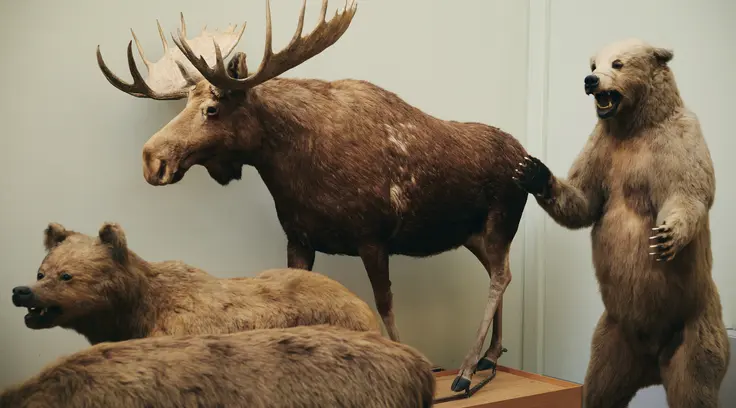
Today’s galleries remain faithful to their original layout. Just as in the early 20th century, there is a comparative anatomy room as well as display cases organised according to the taxonomy of the specimens on show. Only the north hall of the permanent exhibitions has undergone significant renovation, with the theme of extinct animals. This renovation provided an opportunity to showcase a number of vertebrates from species now extinct, which are present in our collections.
*A detailed history of the Cantonal Museum of Zoology, from its beginnings to the creation of the Naturéum, can be found in the book published in 2023 and edited by Michel Sartori, former director of the museum: ‘Dans les coulisses de la vie. Le musée cantonal de zoologie, 1818-2022’. Infolio (Suisse), 2023.
Collections
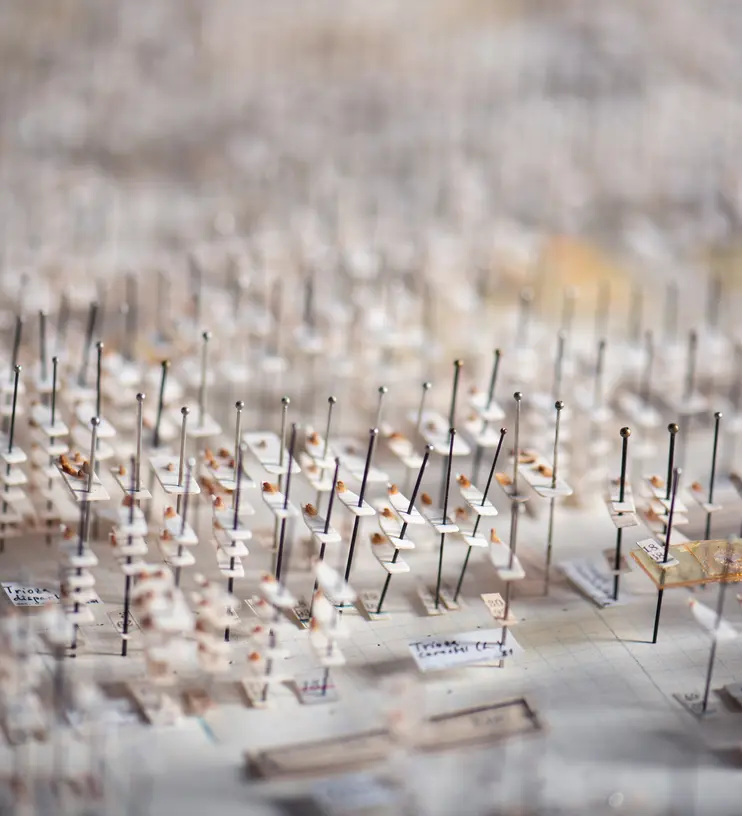
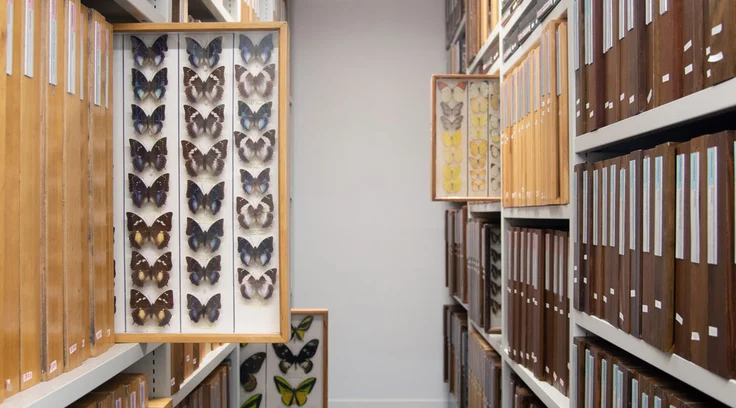
The Naturéum’s zoological collections comprise around 50,000 vertebrates and nearly 2 million invertebrates. Historically, these have come from private collections, donations, and collections resulting from scientific, academic or other research.
Fortunately, ethical standards no longer permit the collection of animals for purely museum purposes. Most of the vertebrates in the collection come from wildlife rescue centres or are specimens found dead and collected by cantonal authorities.
Just as valuable as the animals themselves, the data associated with their collection provides essential information. Thanks to this data, these collections can be considered scientific and made available to academic researchers.
Discover the section of this website dedicated to the collections by clicking here.
Scientific research
Scientists in the Department of Zoology work in several fields:
Aquatic mayflies
Jean-Luc Gattolliat, Curator
The systematics, phylogeny and biogeography of mayflies. As well as the population dynamics of benthic macroinvertebrates.
Aquatic Chironomid Insects
Brigitte Lods-Crozet, volunteer biologist
Research into the use of these insects as bioindicators of water quality in lake environments, their role as sentinels of climate change in alpine environments, and their biodiversity and distribution in Switzerland.
Wood ants
Anne Freitag, Curator
The biology and ecology of ants of the genus Formica, the issues surrounding ‘invasive’ species that are taking over both our towns and the Galápagos Islands. And, of course, the study of ants in Switzerland.
Avian malaria
Olivier Glaizot, Chief Curator
Research, in collaboration with the University of Lausanne, aims to study various aspects of this mosquito-borne disease in titmice and bats.
Where are we?
The Zoology Department team is led by Olivier Glaizot, Chief Curator. The offices are located on the 5th floor of the Palais de Rumine.