
![[Translate to English:] larves d'éphémères](/fileadmin/_processed_/4/f/csm_FMR_jonasii_f4d16b9942.webp)
Systematics of Mayflies
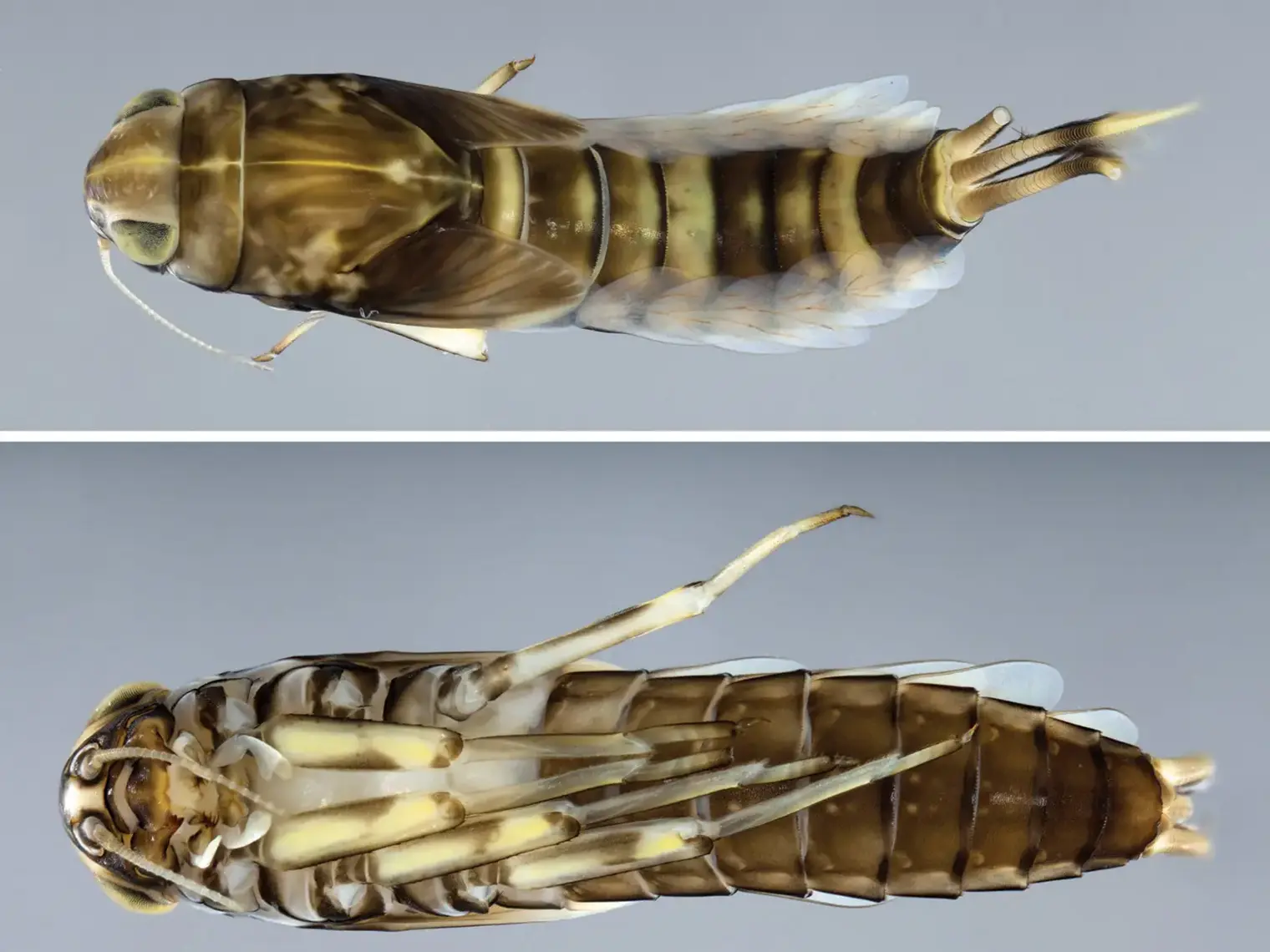
At the Heart of Aquatic Biodiversity: Forty Years of Research on Mayflies
The discovery and description of new species fulfill a fundamental need: to explore, understand, and preserve the biodiversity that surrounds us. The work of taxonomists consists of identifying, describing, and naming species in order to better understand the richness of life, its evolution, and to contribute to its conservation.
Ephemeroptera (mayflies) constitute an order of aquatic insects characterized by a long aquatic larval stage and an extremely brief adult life spent in the air. As excellent bioindicators of aquatic environment quality, they play an essential role in the functioning of freshwater ecosystems. They inhabit a wide variety of habitats, ranging from springs and streams to rivers and lakes. To date, more than 4,000 species have been described worldwide.
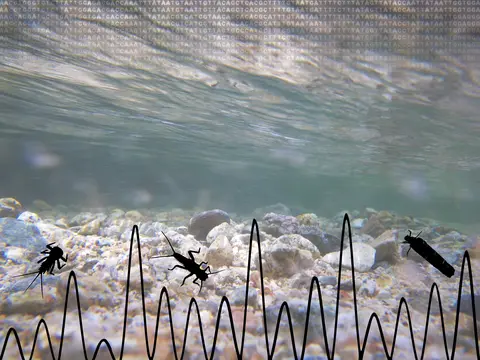
The Naturéum’s Department of Zoology has been studying their systematics, ecology, and distribution for over forty years. The description of new species currently relies on an integrative approach combining morphology, genetics, ecology, and biogeography. Thanks to this rigorous multidisciplinary approach, we have described more than 250 species of mayflies over the past ten years. In an effort to make these advances accessible to as many people as possible, we are also developing easy-to-use identification keys for the scientific community.
Our research focuses primarily on South Asia (Thailand, the Philippines, Indonesia), Australasia (New Guinea, Australia, and various archipelagos), as well as the Maghreb and tropical Africa. We collaborate with numerous universities, museums, and research centers around the world and remain open to new scientific collaborations.
This work has led to the creation of one of the world’s largest collections of ephemeroptera, comprising more than a thousand species, nearly half of which are represented by type specimens.
Project Leaders: Jean-Luc Gattolliat et Laurent Vuataz, in collaboration with Thomas Kaltenbach, Michel Sartori and André Wagner.